
The Chief Rascal
James Tonna reveals the story behind Joe Rascal Racing and the passion that drives it
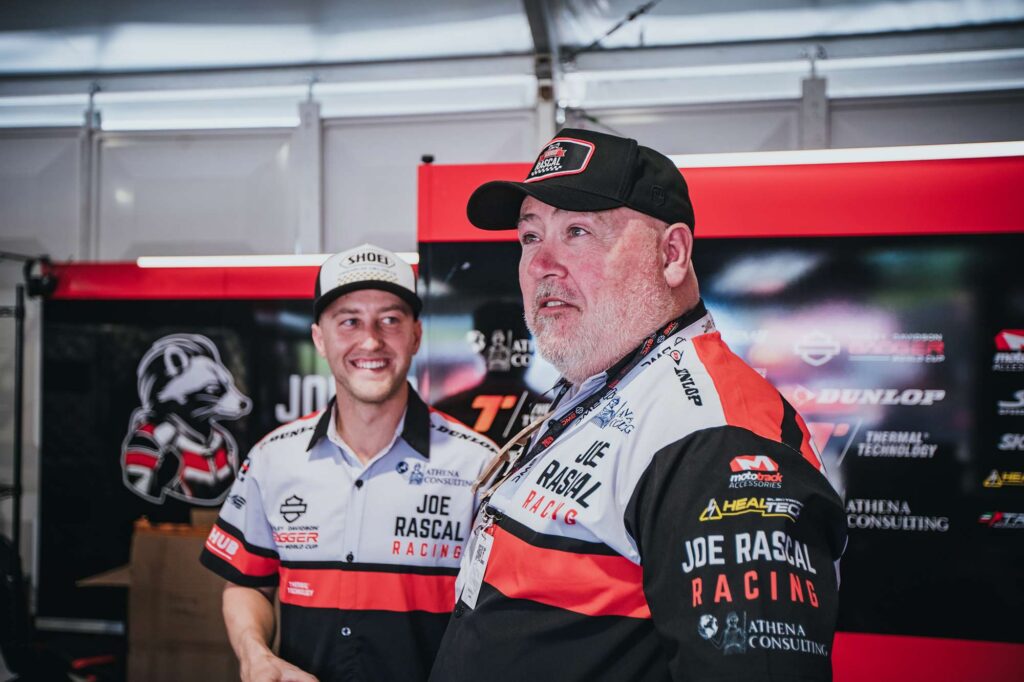
When lifelong bike fan and entrepreneur James Tonna bought Harley-Davidson® dealerships in Melbourne, Australia, he wanted to do things differently. His answer – alongside his business partner and the crack team he assembled – was to create Joe Rascal Racing and put a new brand in front of the world.
“When we heard about the opportunity around the Harley-Davidson Bagger World Cup, a couple of us literally flew to Milwaukee and knocked on the door,” says James. “I think they thought we were kidding, and then they realised we were serious very quickly.”
Harley-Davidson’s decision to take bagger racing onto the MotoGP stage gave the Australian exactly the kind of opportunity he was looking for. Entering an international race championship was an ambitious move, but James saw something much bigger than a race team. Coming from a city that’s steeped in motor racing with two famous circuits, Phillip Island and Albert Park, for James, the logic was simple: “When Harley decides to race on the biggest motorcycle sport platform in the world, you have to be part of it. We saw the opportunity and we pounced on it.”
The decision says plenty about the way he approaches business. He has spent much of his professional life in banking, finance and entrepreneurship, but a love of motorcycles came long before the dealerships, the Joe Rascal brand or the race team.

Bikes came first
“I’ve forever been into bikes,” says James. “I had I think my first bike was when I was 16 or 17. It was about AU$300. It wasn’t great, but we’ve been into bikes for as long as I can remember.”
Those early years were spent around dirt bikes, motocross and enduro before James moved into road riding in his late 20s. Track riding followed, and more recently he’s become a regular at Phillip Island. Harley-Davidson was part of that enthusiasm too. An early Night Rod Special made a lasting impression, while his current collection includes a Fat Boy® Gray Ghost and some considerably more modified machinery.
One Road Glide® has been built into a 200hp, naturally aspirated, street-legal machine using ideas and parts developed around the race programme. Another Low Rider ST® has also been modified for the track and raced at Phillip Island. “It’s always fun to slide past a V4R with a Harley®,” he says, smiling broadly.
The enthusiasm matters because the move into motorcycle retail wasn’t the result of a lifelong plan to own dealerships.
Insanity and opportunity
Asked why he and business partner Barry Fitzpatrick acquired the Harley-Davidson operations in Melbourne, James initially offers a one-word explanation. “Insanity.” Then comes the businessman’s answer.
“It was opportunistic. We had a really good relationship with Harley APAC and had previously worked with Harley. Everything we agreed to do we delivered for them, at the right quality and on time. We’d already built a sound relationship with Harley over a couple of years.”
When the opportunity to buy the dealerships arose, James and Barry looked at the data and the numbers. “The transaction made sense,” he says. “And the team we got was exceptional. We’re really happy with the acquisition.”
That was only the beginning. The bigger question was what they were going to do with the dealerships.
Build a movement
James and Barry had been thinking about the name and character of Joe Rascal for somewhere between 15 and 18 years. He had registered businesses using it during his banking career but had never found the right place for it. Motorcycles finally provided the answer.
“What’s a rascal? A rascal is somebody who’s a little bit naughty,” says James. “They want to be a little bit left of centre. They’re very loyal and very friendly, but they do their own thing.” The raccoon character that now fronts the brand gave that idea a face, while the wider Joe Rascal philosophy came about from approaching the motorcycle business differently.
How do they do things a little bit differently, do things on the edge and push the boundaries as far as they can? Part of that difference comes from the backgrounds of the people running the company. While plenty of the team have deep motorcycle experience, James points out that many of its senior people came from elsewhere and therefore arrived without some of the assumptions of a traditional dealership business. “We’re very focused on customer excellence and we’ve brought that mentality here. We’re about building a movement – it’s the whole point of Joe Rascal.”
James cites brands such as the Bike Shed and ARCH Motorcycle as examples of businesses that have successfully created communities around what they do. Joe Rascal’s ambition stretches in a similar direction: motorcycles at the core, but a recognisable culture and identity around them. And if Joe Rascal was going to describe itself as a performance brand, James felt it had to prove the point.
Race to get views
“For us, the Joe Rascal branding is about how we get out to the public,” he says. “Outside of F1, the Olympics or the FIFA World Cup, MotoGP is the next big one in my mind. For our customer base, how else can you get in front of 400 million viewers?”
There are cheaper ways to promote a motorcycle dealership, of course. James looks at the cost in a different way. “Yes, we are paying for it, but in the scheme of things the cost per view is quite low.” More importantly, the racing fits what he wants Joe Rascal to become: “Our business model is simple. We are a performance brand. In anything and everything that we do, we push the envelope and we push the boundaries. You have to race. You have to be at the top of your field.”
Then he reduces the strategy to a few sentences: “We race to get views. We get views to grow our products. If we do that right, we then reinvest that income back into the next racing platform, and the next.”
The race team, in other words, isn’t simply sponsorship attached to a dealership group. It’s intended to be one of the engines that grows the wider business.

A team built for purpose
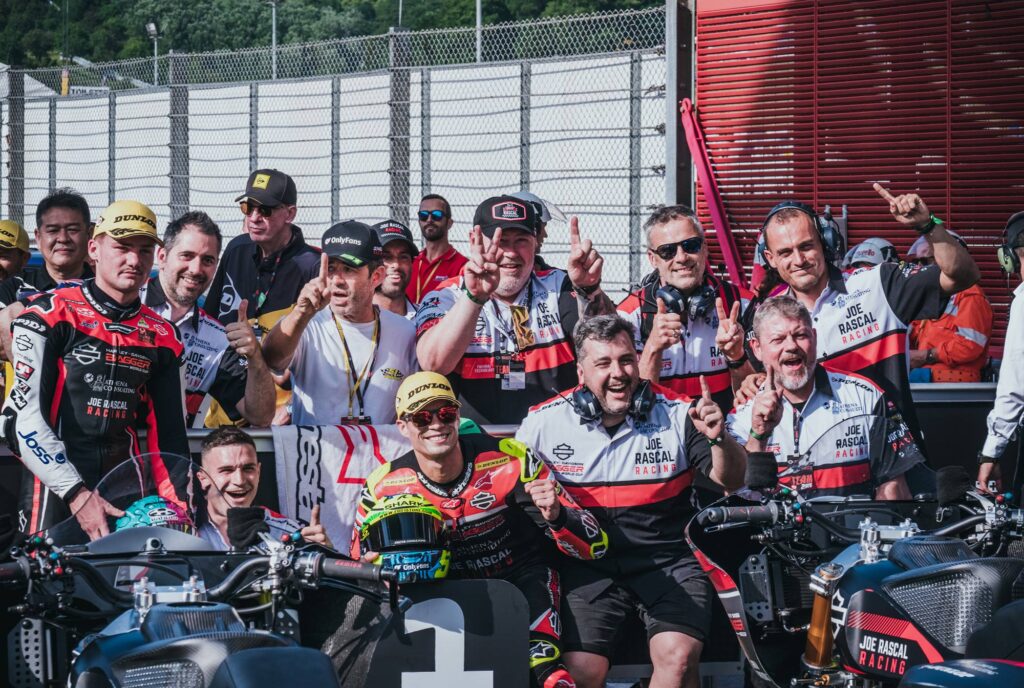
That same thinking shaped the rider line-up. Joe Rascal wasn’t simply looking for the quickest riders. James wanted people who could race at the front while fitting the personality of the brand and connecting with different audiences.
Archie McDonald was an obvious cultural fit. “He’s fast, he’s a bit crazy – he’s a lot crazy! He’s young, but he fits our culture. Archie was a no-brainer for us.”
Eric Granado brought a different kind of experience: an accomplished international racer familiar with the circuits, with the professionalism and profile to complement Archie.
“We built a team for a purpose that wasn’t just about the fastest guys,” James says. “For us, it was about how you fitted the entire Joe Rascal culture, how you fit with the team, but also how you represent the brand and what we’re doing.”
And somewhere between knocking on Harley-Davidson’s door in Milwaukee in 2025 and seeing Joe Rascal bikes fighting at the front this year, the expectations have evolved.
“When we first started this, it was all about, ‘Geez, can we do this? Can we compete?’” says James. “Now it’s: ‘We can win this?’”
This interview was carried out just before the second round of the Harley-Davidson Bagger World Cup at Mugello.
Read more tales from the Harley Owners Group!
EUROPEAN BIKE WEEK 2026
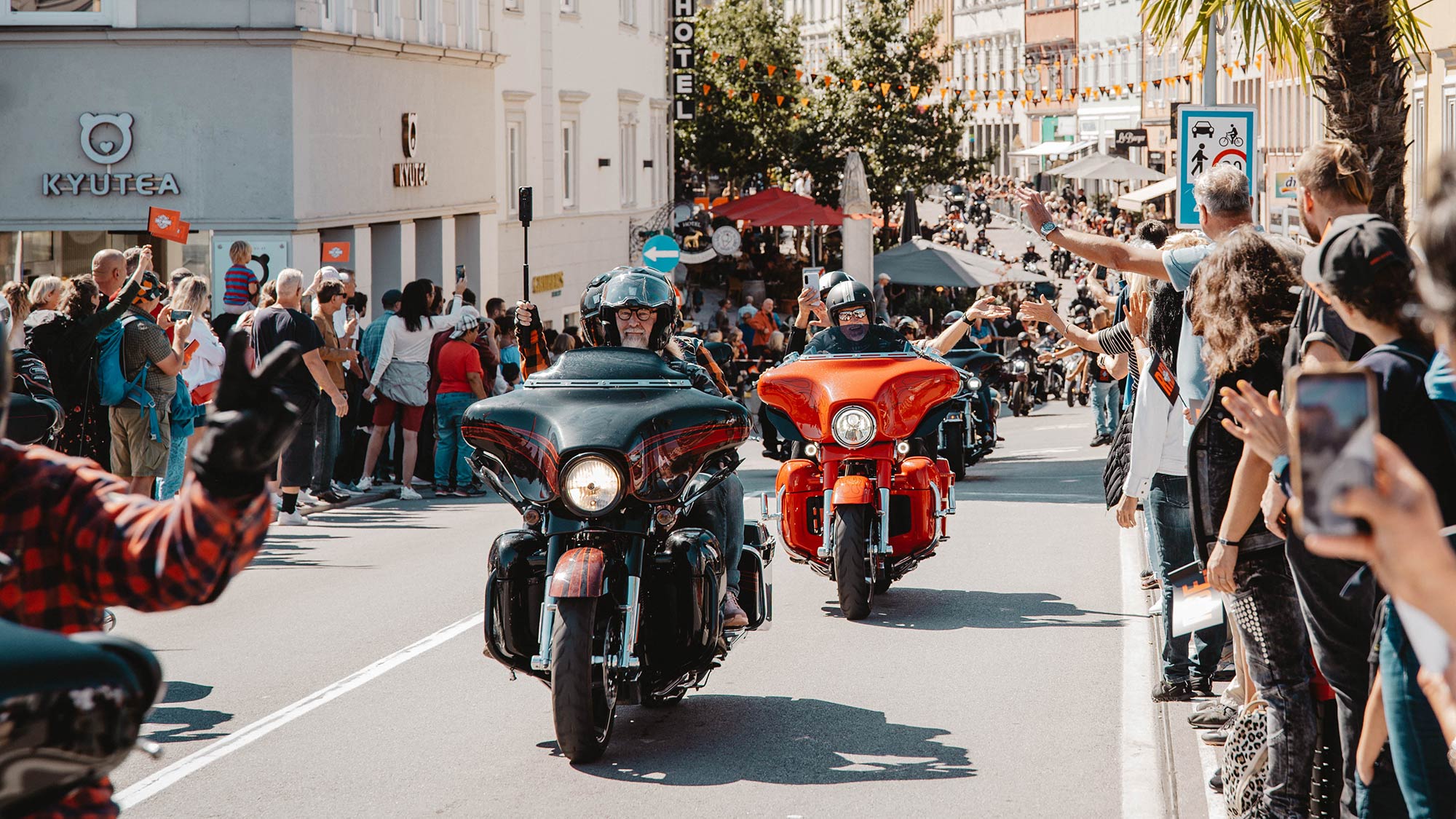
Rain? What rain? Europe’s biggest motorcycle festival rocked Lake Faak once more this September
Understanding and using lane positioning
Follow our guide on where to best place your motorcycle to stay visible and safe in your lane
Start ’em young
The youngest member of Treviso Chapter is already following in her parents’ footsteps